27 ก.ค. 2556
Chiang Mai Travel
For a major 21st century city, Chiang Mai’s public transport options are, for want of a better word, woeful. There is no subway, monorail, or localised rail system, or a permanent useful bus service for that matter. Meter taxis are also non-existent away from the airport, as are motorcycle taxis. However, getting around in Chiang Mai is seldom a problem.
Travel in Chiang Mai is all about smoky three-wheelers and bastardised pick-up trucks - tuk-tuks and songthaews. They are both ever present on Chiang Mai’s streets and have somewhat of a monopoly on the transport situation here. While frequent and efficient, they are also on eye-sore.
The tuk-tuk (for the sound it makes) is the traditional Chiang Mai taxi; a point-to-point service that zooms in an out of traffic and belches fumes. Easily the fastest travel option, tuk-tuks are known to overcharge and are largely open to the elements, meaning air conditioning and waterproofing is not an option.
Despite their obvious disadvantages, getting about by tuk-tuk is not all that bad and they’re not as expensive here as their Bangkok counterparts. They park up outside the bus and train stations, outside shopping malls and main temples, as well as along the main routes around the town. You can flag one anytime, but always pre-negotiate the fare and don’t be afraid to talk them down.
So-called songthaews are as apparent as tuk-tuks, although they are much larger and are shared transport. If tuk-tuks are the taxis, songthaews are the buses; taking in set routes but also deviating for charters. They run all roads in the city and you simply put your arm out to hail one.
For those on set routes, say heading west along Thapae Road, you jump on the back and then ring the bell when you want to get off – no need to speak with the driver; you simply pay him on alighting. Empty ones (no passengers on the back) can generally be chartered, operating as a tuk-tuk to take you anywhere in the city. Charter costs are about the same, but the beauty being you can fit your entire family, or group, on the back.
Most songthaews are red and go in all directions within, and outside, the city, while coloured ones specifically go between outlying towns and Chiang Mai. White ones serve Sankampaeng in the east; yellow ones go to Mae Rim in the north; blue ones go to Lamphun in the south (via Saraphi); and green ones Mae Jo, northeast.
In the city, most songthaews from out of town terminate (and depart from) the Warorot Market area near the western bank of the Ping River, to the east of the moat. The exception is Hang Dong-bound songthaews, which go from Pratu Chiang Mai market at the southern part of the moat.
Chiang Mai also has a standard bus service, although it is largely unapparent to most tourists, and even to the expat populace. The buses are large, clean, white, air conditioned and take in major city routes. The most useful route is the one that links the airport to the city, Route 4.
The other public Chiang Mai transport option is its metered taxis. Unfortunately, they are few and far between – a product of the mafia-like might of the tuk-tuks and songthaews. The only real time meter taxis are visible is outside the airport and pulling up at hotels.
It is practically impossible to flag one down as those on the move will invariably already have a fare, or are en-route to meet one. At the airport, you obtain a ticket from the official desk in the arrivals hall and then hand it to a taxi driver out the back. The price is set so the meter will therefore be ignored. For a taxi anywhere else, it is necessary to call the centre: 053 279 291.
If you are not impressed by the public transport options in Chiang Mai, consider renting a scooter. This is the most practical option for seeing the city, although somewhat risky. If you are a deft rider, you can easily negotiate the traffic and tight streets of the old town, as well as head out into the country hassle-free.
Honda Dreams and Waves are the de facto motorbike rental option, though many places also have the modern, direct-drive scooters, such as the natty Honda Click. You can also rent a 150cc Phantom (the official largest size motor in Thailand), or go for a 250cc scrambler or even a big bike. Licenses are not required to rent bikes, but it is best to have an international drive permit, or your local license, to hand in case you are stopped by the police. Always wear a helmet and pay insurance, too.
Other options for getting around within the town include by bicycle and on foot. Bicycle rentals are super-cheap and they don’t need any fuel. You can also rent mountain bikes in Chiang Mai and take to the city’s lofty terrain, or just stick to tearing up the streets of the old town.
While you won’t need to hire a car unless you are a family or plan on visiting the city environs, car hire is quite cheap and available. There are big car rental firms, like Budget, in town as well as local ones. It is best to steer clear of those tiny places on the street and stick with the larger firms. One popular local firm, however, is Northwheels, who have a good range of vehicles, if a little used.
Thank You from
http://www.manager.co.th/asp-bin/Image.aspx?ID=2392318
News in Chiang Mai
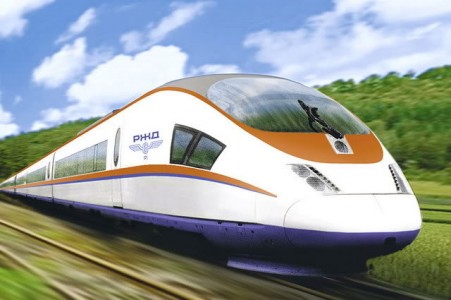
CHIANG MAI, 14 January 2013: Thailand’s Chiang Mai, the main gateway to the country’s northern destinations, will be the first city to gain a high speed train service from Bangkok.
Chiang Mai governor, Thanin Supasaen, said: “The project is expected to be completed in three years.”
Prime Minister Yingluck Shinawatra has already approved the high speed railway project called northern land port, which was officially presented to her by the Chiang Mai governor.
Once the project is completed, it will turn Chiang Mai into a transportation and logistics hub for the entire north and strengthen the city’s role as the second largest city after Bangkok.
The rail service is expected to be ready by 2017.
Other transport facilities such as ring roads and airport will also be improved to prepare for the upcoming ASEAN Economic Community in late 2015.
The Chiang Mai railway route will stretch 745 km and have 13 stations in 11 provinces. Even with all the stops officials are claiming the journey will take no more than three and a half hours.
Officials also claim trains will be able to carry as many as 34,800 passengers daily. Trains will travel at 250 km per hour and if they can attract passengers, as stated by officials, they will represent the most efficient and environment friendly means of transport, based on fuel burn per passenger carried.
Last year, TTR Weekly’s update on tourism in the north interviewed Chiang Mai Provincial Administrative Organisation president, Boonlert Buranupakorn, who said the province required a good public transport system to attract more tourists both foreigners and domestic.
“We believe the construction of the first high speed railway project should be ready in three years, connecting Bangkok and Chiang Mai. This was confirmed by PM Yingluck who believes it will boost tourism to the province.
“It will reduce travelling time from Bangkok to Chiang Mai from seven hours to three and a half hours and will carry more travellers than other mode of transport.”
There are five high-speed rail projects that will cost Bt983.47 billion. The other four routes are: Bangkok-Nong Khai, Bangkok-Ubon Ratchathani, Bangkok-Rayong, and Bangkok-Padang Besar.
On average, 5 million tourists visit the province and generate around Bt30,000 million to Bt40,000 million a year. Of that, 70% are Thais and 30% foreigners.
Trains Bangkok to Chiang Mai
Travelling by train from Bangkok to Chiang Mai, or in reverse, is a popular budget means of getting between the cities. Slightly more expensive than the bus, and taking longer, the train is a much more comfortable means of travel, especially if you take an overnight sleeper.
Recently, the emergence of budget flights for 1,500 baht, or less, between Bangkok and Chiang Mai has taken the edge off train travel, but many prefer to see the country from the ground. Towards the end of 2009 the ageing rail network received plenty of negative publicity owing to a series of accidents and wildcat strikes by the union, poor public perception, mismanagement and lack of investment have put the brakes on modernising this increasingly sidelined service. Fewer travellers are using the train these days.
Invariably the train arrives in its own 'Thai time', which is usually up to an hour late. Food and drinks are freely available on board, served to your own seat, at a reasonable price (a meal and drink is less than 100 baht). However, there's no harm in picking up snacks beforehand on the station concourse.
There is adequate luggage storage and safety on the trains is, on the whole, pretty good. You are advised, however, to keep your valuables close at hand while sleeping. If your train isn't air-conditioned, it will at least have fans, but can nonetheless be quite warm. There are no individual compartments (except in first class); the bunks are lined length-ways along the carriage.
The beds are big and comfortable and if you take a bottom bunk, you can awake to the pretty mountain scenery as the train enters the highlands and traverses Doi Kuntan National Park and mountains between Lampang and Lamphun. The top bunk can be a challenge for the claustrophobic and difficult to climb into if you are slightly immobile. It can also be difficult to sleep due to nearby ceiling florescent lights, which remain on throughout the night. Beds are generally made up from 20:00 onwards and broken down about an hour before reaching your destination.
First class trains do have individual cabins, yet the 1,200 baht prices makes them poor value against the emergence of cheap air travel. Nonetheless, they are comfortable and private, can be locked and provide you with your own table, sink, and free drinking water. If you are travelling alone, however, there is no guarantee who you will be sharing with; luckily, people in Thailand are polite and friendly. You needn't worry about safety among fellow passengers.
During the busy season (November to February), or on weekends, tickets should be booked a couple of days in advance; otherwise we suggest you arrive at least an hour earlier than the second-last train, to avoid disappointment. There is a safe luggage storage facility at both stations, charging a minimal fee. With 24 hours notice a travel agent can arrange a ticket for you, saving you a trip to the station.
Although Chiang Mai train station has limited facilities, there are toilets, a comfortable concourse and food vendors. Bangkok train station has far more to offer, with plenty of waiting seats, a newsagent, supermarket, restaurants, bars, plenty of food vendors and even a KFC. Taxis or tuk-tuks are freely available at both; parking is short at Bangkok station.
Thank You from
Chiang Mai: Family Travel
Elephant camp and bamboo rafting
When in Chiang Mai, you can guarantee a fun filled time for couples or families by visiting a working elephant camp. We went to the Chiang Dao camp, a bit more than an hour's drive north of Chiang Mai. It's been in existence for more than 40 years.
First you see where the elephants are kept and trained, you are allowed to feed the elephants bunches of bananas, and then you are taken down to the river where the mahouts (each elephant has a "driver" that remains with him for years) bath the elephants. Then you go into a small amphiteater where the mahouts put on a brief exhibition with their elephants. The elephants carry logs, march in columns, follow commands, and one elephant even draws a painting with a set of paints and brushes. The paintings are for sale if you're interested.
Then they attach a seat atop each elephant and you go in pairs on an elephant ride through the forest for about 90 minutes. You sit in the seat and the mahout sits in front of you on the neck of the elephant to guide him/her. You stop halfway to visit a small village and then return to the camp.
To end the half day's activity, we went on a bamboo raft trip several kilometers down the river. You go over a few mild rapids, but it's really a fun experience that it is entertaining for young and old.
Playgrounds in Chiang Mai
If you are travelling with smaller children, chances are you'll want to find a quiet playground at some part during your trip.
Buak Haad City Park: In the Southwest corner of this lush park, you'll find a small playground with few and somewhat outdated equipment. Update 11/12/11 - this playground has been rebuilt with new equipment. There is also now an aircon coffee shop in the middle of the park. The location is nice though and the ice cream vendor is certain to pay a visit, even on weekdays. Outside the main entrance to the park are a few fruit, food and drink vendors. Inside the park you can rent a straw mat to sit on and even get an outdoor massage. Click here for location on a map.
700 Year Stadium
This is a big sports complex on the edge of town. It will take you about 25 minutes to get here from a city-centre hotel, but well worth it for your kids once they've had enough of temples and markets. Massive open spaces, a big play ground with swings and some great (but a bit old) helicopter climbing frames. Also tennis courts - 50 Baht/person/hour, with racquets to hire, and an Olympic sized swimming pool (60 Bath adults/ 20 Bath children), plus badminton courts, basketball courts etc (free). Thais come to exercise from about 4.45 pm - in the winter the sun sets over the mountain at about 5pm, so perfect for about an hour of running around for your kids from then. Plenty of drinks/snack vendors in the complex.
City Municipal Stadium: City centre. This is a large playground with much new equipment for kids aged 2-7. Lots of shade on the area itself. Some worn BMX ramps nearby and an outdoor basket ball court also. Many drink vendors and a single food vendor nearby. Few visitors on week days, more on weekends, where you might also see a youth football game through the open fence to the stadium. Ask your driver to take you to the stadium. Click here for location on a map.
Thank You from
http://static.travelmuse.com/docs/artwork/interx/family-travel-full.jpg
Driving In Chiang Mai
If you like to be free to go where you want, when you want, at your own pace, driving is a good solution. It is not as difficult as it seems to some people and it is not as easy as it seems to others. You must be an experienced and confident driver because in Thailand it is tricky and not only because they drive on the LEFT side of the road.
Fact is, Thais don't learn how to drive before using a car, it will come as no surprise that they have a very high rate of road casualties. A liking for heavy drinking (beware at night) and the widespread use of mobile phones don't help. But if you drive DEFENSIVELY you should manage.
To visit the city and its close surroundings, like the Doi Suthep, the Sankampaeng road (factories, hot springs, Borsang village) or the Mae Rim area (elephant camp, orchid and snake farms, waterfalls) a motorcycle would suffice.
You can choose a full automatic scooter or a semi automatic one (auto clutch) better suited if you go in the mountain. Prices should start at 100฿ up to 300฿ a day (gas not included). Note that there is no full coverage insurance, in fact if you're the culprit, you'll pay for any damage you cause.
Nobody in the rental shop will ask you for a driving licence, but you better have an international drivers permit and your own national licence to meet the expectations of Thai law and your own insurance standards. You MAY be asked to leave your passport, or a photocopy + a deposit.
The police WILL stop foreigners if they fail to wear a helmet. All motorcycle rentals will include a plastic helmet of varying condition. You may prefer to spend 400฿ and purchase a new one, especially if you're to spend a few days riding the countryside.
400฿ is also the approximate fine if your caught not wearing one. Anecdotally, after the 15th of the month, Police tend to enforce the law more rigorously
If you want to go farther away from Chiang Mai, like the Golden Triangle, the Mae Hong Son loop, or the Doi Inthanon Park, you may need to rent a car. However, if you're comfortable riding a motorbike (even a small one), it's a great way to see the mountains.
You'll find local rental shops or international names in the city. The cheapest car you can rent is a Suzuki Carribean, 4WD, the closest thing you'll find to a tin can. But at 800฿ a day it's a good deal. Otherwise a good full automatic sedan is enough to deal with the roads as long as you don't venture into side tracks.
Be very careful when you rent from a budget company. Remember that if you are renting from a small company, there is no road service and you will even be charged for a flat that you had to pay to have repaired. It is assumed that flat tires are your fault. Read the fine print of the contract. If you have a problem, you can call the Tourist Police, who are wonderful, though the response time is not quite as fast as in the US or European coountires.
Gas/Petrol stations are plentiful, although not all will accept credit cards, so be sure to have cash with you.
On the mountain roads, trucks and buses can be agonisingly slow. Overtaking is an art you have to master if you don't want to be stuck in dense black fumes for 10 minutes. Thais can be seen overtaking on curves, or within close proximity to oncoming traffic. There is only one thing to do, stay on the left side as much you can and pull over if necessary because the incoming car won't. You may be stopped by police checkpoints en-route to the North. They may or may not check that your documents are in order... just smile, remain calm and polite. If you're not blatantly misbehaving you'll soon be on your way.
REMEMBER: 1155 - The Tourist Police. In case of problems, they're the ones you should contact.
Thank You from
https://blogger.googleusercontent.com/img/b/R29vZ2xl/AVvXsEhDdNwiyn-CMwrm0b16VJ4V2gL_SHw0_bfNER5MEl-OqxmB2UeVgKb7eHY4lDcvv4ZhyphenhyphenaE93BVAvH8NqB4aTn-GrfmrcOnxxIH0B0-5-7iGTKOxWDOWM1VxJ0uYsJPmWvXpQVcTSS1ImBo/s320/chiang_mai_warorot_market_street.jpg
Chiang Mai: Travel
There are three main options for getting to Chiang Mai, which include by air, road, or rail.
International Flights
The majority of visitors to Thailand fly into the Bangkok International Airport , the countries largest and busiest airport. If flying from certain international locations such as Luang Prabang, Singapore, Taipei, Kunming, Mandalay, or Chittakong, it is possible to fly directly into the Chiang Mai International Airport , but this is generally not an option.
Domestic Flights
From Bangkok to Chiang Mai have become extremely cheap. Round trip fares as low as $40 are not uncommon. If you fly to Chiang Mai, you will find getting around the airport to be quite easy as it is relatively small.
If you plan to take a metered taxi on into town, ask for small notes for your taxi when you exchange currency. The exchange booths are familiar with the request, will do so willingly and give you a good supply of small bills. Many taxi drivers either do not have small change, or will tell you they don't, possibly hoping you will let them keep a large note/bill to avoid a problem or delay, the cost to any Chiang Mai area hotel is THB120
Buses
The least expensive method is to take a bus, but this is also the least comfortable. Even though most tourist buses have air conditioning, reclineable seats, and play movies, people who take this ten hour trip do not consider it very comfortable.
Buses from Bangkok to Chiang Mai depart at least every hour between 05:30 and 22:00 from Mo Chit (Northern) Station. Mor Chit is the last BTS station on the line.
The bus takes roughly 10 hours. VIP buses are recommended (fare THB400 - 600), offered by either the government or private companies. These can also be arranged from travel agents.
Renting a car
In Bangkok and driving to Chiang Mai is another option. This provides the most freedom to explore side roads and non tourist areas. Make sure to check out the Driving in Thailand Page before choosing to get behind the wheel.
Passenger Trains
The trains in Thailand are quiet punctual and it is a safe and comfortable way to travel. The trains are Air-conditioned. Most journeys by train are overnight and take approximately 12 to 15 hours.
Night trains between Bangkok and the North is a good way to travel since it will save you a night in a hotel. The bad thing about it is that they are so popular that they are almost always full.
Trains for Chiang Mai are always very busy. Try to purchase your ticket 2 to 3 days in advance. If you decide to take a train, when you arrive in Bangkok, plan your Chiang Mai trip and purchase your train ticket right away.
Main Station phone numbers: They usually speak good English, but the phone lines are often busy
- Bangkok Hua Lampong main Railway Station: (02) 223-3762, 224-7788 or 225-0300, extension 5100-01
- Chiang Mai Railway Station: (053) 245-363 / 4 or 247-462
NOTE
The sleeper trains, 2nd class is very nice, with a clean berth. You have a choice between, Upper berth (smaller and cheaper), Lower berth (slightly larger, and with the window, also slightly more expensive.)
A second choice is also offered: Fan compartment, noisy since window is open, but with thief-shutter protection.
Air-conditioned, very cold, but silent. Advisable in the warm or raining season.
Trains runs everyday, prices vary on each train and category that you take.
Best to take the Sleeper trains.
Avoid the Sprinter train. - Sprinter train is a Diesel car with no sleeping berth. One runs during the day and one during the night.
Sleeper trains and Diesel trains, both have seat 2nd class air-condition.
The most convenient
Special Express Train 5, departs Bangkok 19:40/arrival Chiang Mai 07:55
Rapid Train 35, departing Bangkok at 06:40/arrival Chiang Mai at 19:35
Sprinter Diesel Rail Car 907, departs Bangkok at 08:10/arrival Chiang Mai 18:50.
Fare for a 2nd class air-condition seat is THB471, Lunch box included.
Thank you from
http://www.thealami.com/upfile/thaismail2.jpg
Breakfast in Chiang Mai
What is your ideal breakfast?
A good way to start your day with our cool breakfast Chiang Mai
For years, breakfast considered as the most important meal of the day, it is wise to get good food in the morning because there are many kinds of food out there, some that are good for you, and some that are not so good. On top of that, it is even harder to find such a nice meal in the morning when you travel out of the country.
This small, friendly, affordable and yummy place, runs by a Franco Thai couple, also called Cool Breakfast, located in the heart of Northern Thailand, Chiang Mai. This place is one of those rare places where you can get the real tasty & healthy French breakfast or American breakfast in Chiang Mai. All dishes are fresh from the kitchen, so you can be sure to get a healthy food and delicious dishes. On top of that, you will be sitting and eating at the relaxed setting with an amazing meal plus free wi-fi signal.
We offer 6 blends of espresso coffee including an organic coffee from Trade Fair.
Even though, this place does not serve you with a long list menu of breakfast, but you can be sure you will get the premium quality such as 7 Grains and Traditional French Baguette, yummy Croissant, high grade Earl Grey and Oolong tea, home made yogurt, 100% natural fresh juices, tasty Espresso or Cappuccino and of course in an American cool way; the fried, scrambled, bacon, toasts and ketchup.
Though the baguette and croissant today are often considered one of the symbols of French culture viewed from abroad. Both have long been staple food of French bakery and pasty. Here, we serve original and well made baguette croissant together with tasty French butter and home made strawberries jam.
Starting your day off right is a good way to help to keep your body in shape and to prevent problems later on in life… Stay healthy people, get an healthy breakfast in Chiang Mai !
สมัครสมาชิก:
บทความ (Atom)